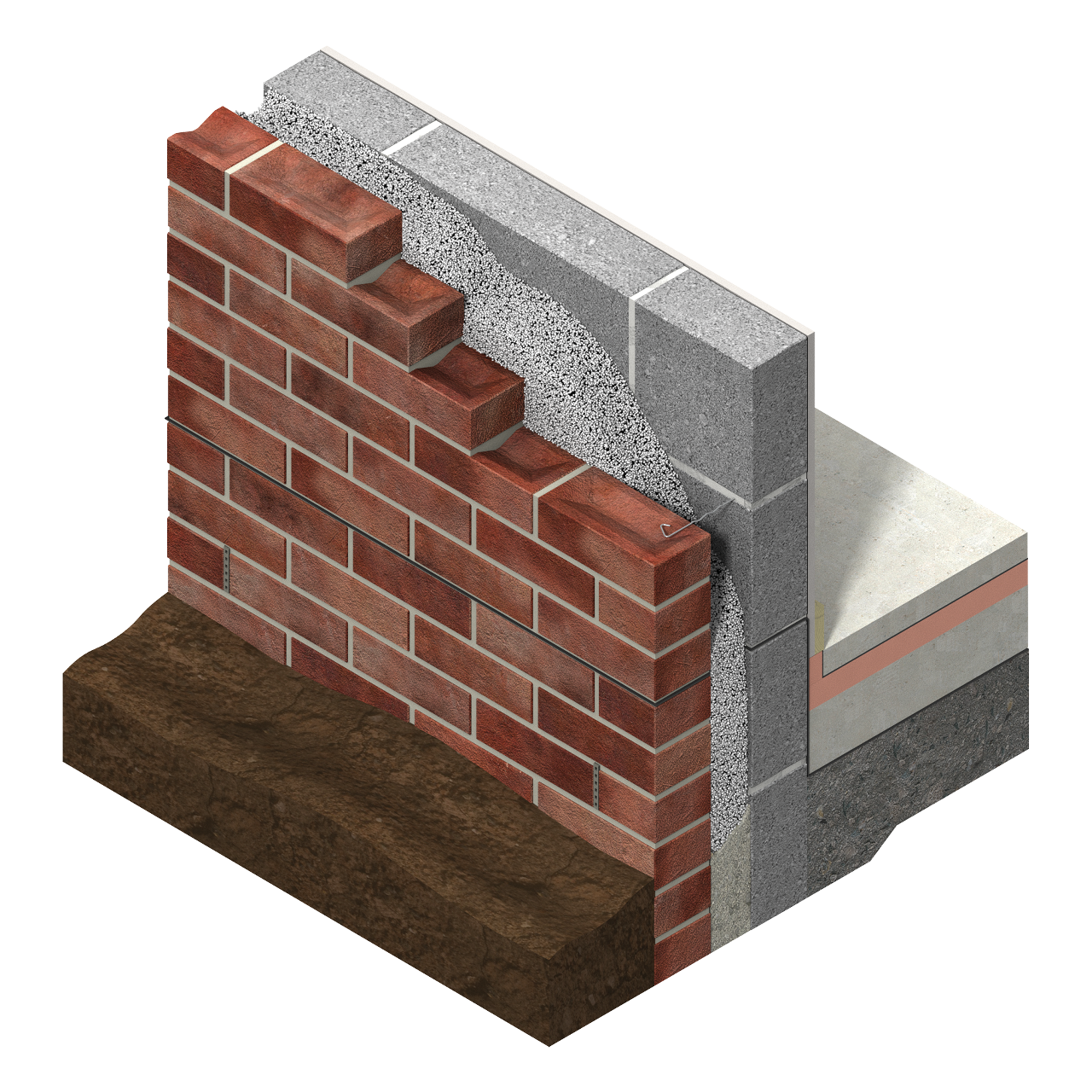
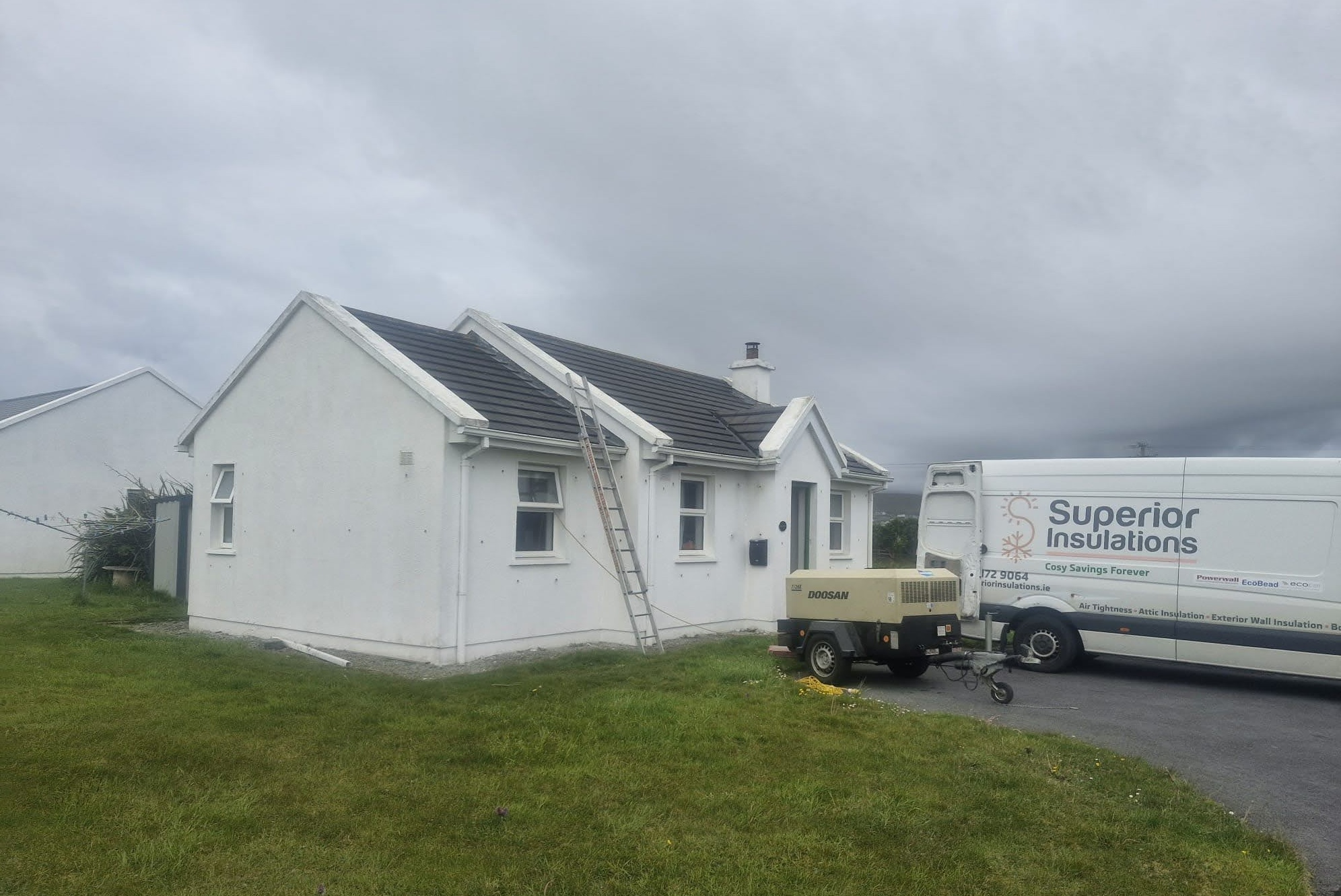
Cavity wall insulation fills the empty space between your inner and outer walls — stopping heat from escaping and cold air from creeping in. Quick to install, long-lasting results.
SEAI Grant Available: Up to €1,800 towards the cost of Cavity Wall Insulation
Most homes built in Ireland from the 1950s onwards have cavity walls — two layers of brick or blockwork with a gap (cavity) between them. Left empty, this cavity allows warm air to escape and cold air to enter. Cavity wall insulation fills this gap with a high-performance material injected through small holes drilled in the external wall. The holes are then neatly filled and virtually invisible. It's a clean, fast, and extremely effective way to dramatically reduce your home's heat loss.
The Process
How it Works
1
Wall Survey
We check that your walls have a suitable cavity using a borescope camera — a small inspection camera inserted into a test hole to view the cavity condition.
2
Drilling
Small holes (approx. 22mm) are drilled in a pattern across the external wall, typically at mortar joint level to minimise any visual impact.
3
Injection
High-performance EPS bead insulation is injected under pressure through the drilled holes, completely filling the cavity from top to bottom.
4
Finishing
All holes are filled with matching mortar and blended to be as discreet as possible. The wall is left clean and tidy.
Is This Right For Me?
Suited For
Homes built from 1950s–Current
Properties with cavity walls (check with us if unsure)
Homes losing heat through external walls
New builds with cavity
Cold walls in winter to the touch
SEAI grant applicants
Common Questions
FAQs
Homes built in Ireland after the 1950s typically have cavity walls. A good indicator is the width of the wall — cavity walls are usually wider than 260mm. We can confirm this during a free survey.
The holes drilled are very small (22mm) and are filled with matching mortar afterwards. In most cases they are barely noticeable, especially on rough-cast or painted walls.
A typical semi-detached home takes about 4–6 hours. Larger detached homes may take a full day. Either way, you can stay in your home throughout.
Not always. Homes in very exposed coastal locations, or those with existing damp issues in the cavity, may need a different approach. Our survey will identify any issues before we recommend a solution.